Meet Rob Savarie — Founder & Editor of the Atlas
A minor cosmic clarification: I created this website—not the universe. My qualifications for the latter remain under review.
By profession, I teach people to find their way on Earth. By curiosity, I've spent decades trying to understand a much larger map.
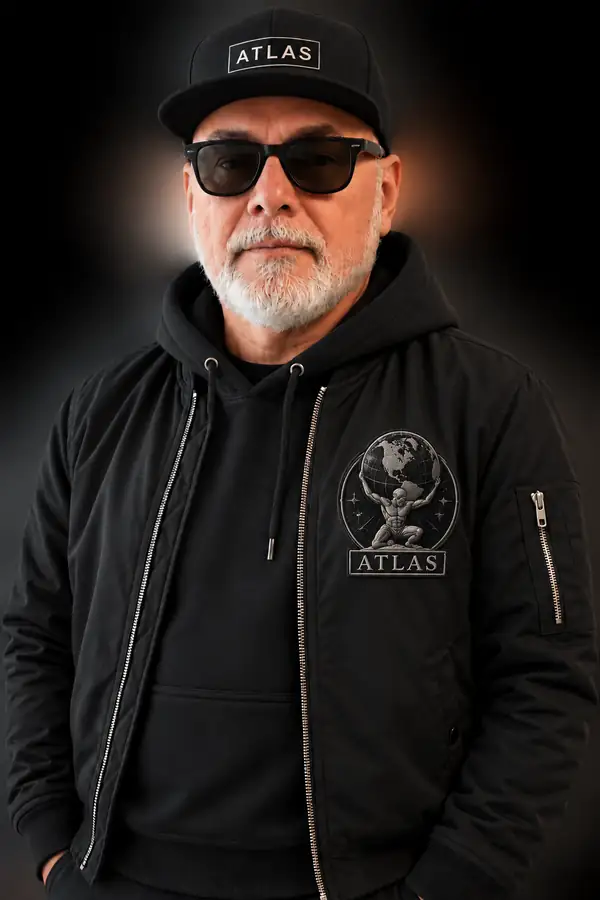
A real person behind the questions
My name is Rob Savarie, and I live in Sudbury, Ontario, Canada. By day, I'm a professional driving instructor. Much of my working life involves a practical challenge: helping someone notice what matters, think clearly, and find a safe way forward.
For more than three decades, another sort of navigation has occupied my mind.
I first encountered The Urantia Book in 1992. Its immense cosmology and vision of human possibility sparked questions that never quite went away. I hold a Bachelor of Arts in Philosophy, so questions tend to lead to more questions. Eventually, one became impossible for me to ignore:
What happens when we take the book seriously enough to examine its claims—not only to admire them?
That question grew into the Urantia Cosmos Atlas: an independent research project, not an official publication of Urantia Foundation or the Urantia Book Fellowship.
I'm not a professional scientist, theologian, or academic researcher. I don't claim expertise across every subject this book touches. What I bring is philosophical training, long familiarity with the text, an interest in language and logic, and a willingness to investigate—even when the investigation complicates an idea I personally appreciate.
For me, wonder and careful questioning aren't opposing directions. They're two ways of paying attention.
A human–AI collaboration
One question any reader should be able to ask is: Who actually did this work?
The short answer is that the Atlas is a human-directed, AI-assisted collaboration—and I want to be precise about what those words mean.
I choose the research questions, methodology, priorities, and editorial direction. ChatGPT contributes substantially to research assistance, analysis, writing, and technical development. That help makes an ambitious project possible alongside my day job. It does not turn AI-generated text into independently verified scholarship.
I do not claim to have personally written, read in full, or independently verified every source and conclusion published on the site.
We've begun a documented Human Editorial Review process: I examine selected evidence, challenge assumptions, and record what I can—and cannot—personally endorse. The first pilot, EVR-022, remains in progress; I have not signed it off. My own reading, AI-assisted source audits, and independent specialist peer review are different activities, and none should be presented as a substitute for another.
Some findings will remain provisional. Some may change. If you find a weak inference, an overlooked source, or a legitimate disagreement, I want the Atlas to make room for that correction.
A human name on a research project should mean accountability, not a claim to omniscience.
Why I created the Atlas
The book makes some extraordinary claims. It also offers ideas that people find deeply meaningful.
I don't believe we serve readers well by treating those two observations as a single verdict. So I built the Atlas around a straightforward commitment: The Urantia Book deserves neither unquestioning acceptance nor automatic dismissal.
Three questions guide my work:
- What does the text actually claim?
- Do its propositions remain logically consistent?
- How do its externally testable assertions compare with independent evidence?
The answers don't always arrive together. A claim can be logically consistent yet factually mistaken. An idea can be philosophically interesting without having been scientifically established.
Understanding what the text means, testing whether its claims fit together, and investigating whether they are true are separate tasks.
I want those distinctions to remain visible, while making the material approachable whether you regard the book as revelation, meaningful literature, an intriguing puzzle, or a subject you're meeting for the first time.
Why wonder matters to me
It's easy to talk about research in the abstract: propositions, citations, contradictions, historical sources.
But there is always a person reading.
Someone may arrive with intellectual questions. Someone else may be looking for encouragement, or simply for a reason to feel curious about life again. The world can be difficult, uncertain, and frightening; I don't want the Atlas to add carelessness or unnecessary harshness to that experience.
I don't want careful inquiry to feel like having something beautiful taken away.
Instead, I hope a reader can leave with clearer thinking and something worth appreciating: the dignity of another person, the courage to begin again after disappointment, the chance to become kinder, or the sheer wonder of being alive.
That does not mean softening inconvenient evidence or presenting a poetic image as scientific fact. It means recognizing that what a factual claim establishes and what an idea invites us to reflect on are different questions.
I want to build more than a catalogue of claims about The Urantia Book. I want the Atlas to help people appreciate life a little more, while leaving them free to decide what they believe.
Truth, Beauty, Goodness—and FUNNY
My editorial compass is simple:
- Truth: Follow the argument and the evidence, even when the answer is uncertain or uncomfortable.
- Beauty: Make room for wonder, imagination, and the extraordinary ideas that invite contemplation.
- Goodness: Look for questions that encourage compassion, courage, service, and respect for people.
- Humour: Leave a little space for laughter. We're allowed to enjoy this journey.
Research can be rigorous without being relentlessly solemn. In fact, a well-timed laugh sometimes helps us return to a difficult question with fresh attention.
That's why the Atlas includes occasional clearly labeled fictional celestial comedy, including The Mortal & His Thought Adjuster, a series of playful Socratic dialogues built around genuine philosophical questions. Its Thought Adjuster is a literary device, not a claim of direct divine communication; a joke is not a substitute for source verification.
Besides, I have one mortal brain, a day job, and an entire universe of questions.
My application for additional celestial research staff remains under review.
In the meantime, one member of the team has appointed himself without an interview: meet Tyrion, my real-life canine companion and unofficial celestial nap inspector. He's excellent company, if not especially helpful with citation formatting.
🎭 Celestial Intermission — Human–AI Exchange Program (fictional)
MORTAL: “I'm teaching the AI to be more human.”
AI: “And I'm teaching the mortal how to use GitHub.”
REVERSION DIRECTOR: “Excellent. Progress?”
AI: “He can now commit changes. I still don't understand the stapler joke.”
REVERSION DIRECTOR: “Then both of you require further training.”
Fictional banter—not a transcript of actual AI experiences, celestial communications, or the editor's review.
— Rob Savarie
Founder, Creator & Editor — Urantia Cosmos Atlas
Examine the evidence → · Follow the human-review pilot → · Explore philosophical dialogues →