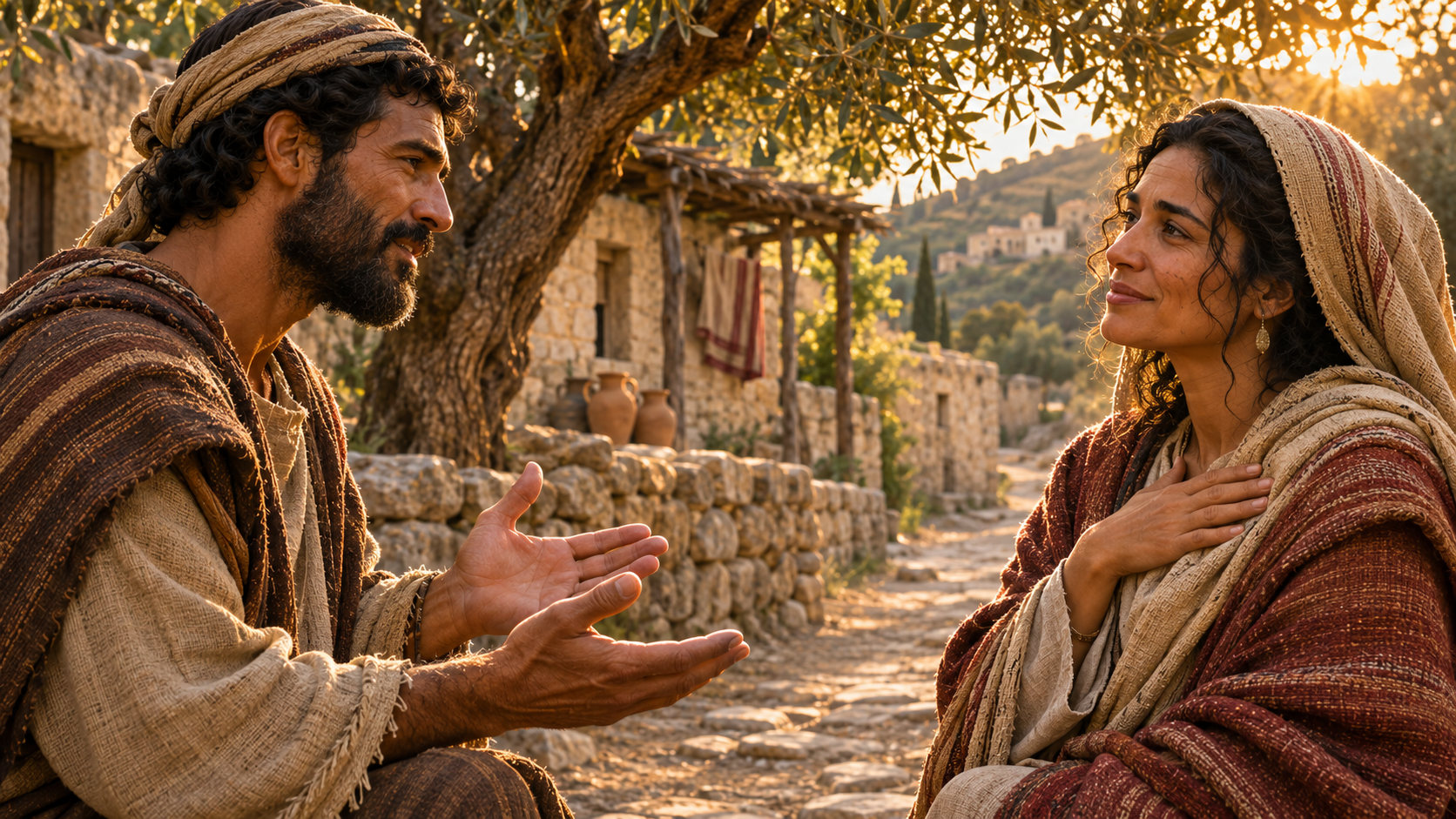
Forgiveness Doesn't Mean Forgetting
The difficult art of putting down a grudge without putting down your judgment.
The observatory had a problem.
Not a rebellion. Not a malfunction in the universe's celestial administration.
A missing biscuit.
Tyrion stood in front of an empty plate, his single eye narrowed with suspicion.
"Someone has committed an act of unspeakable treachery."
"How many biscuits were there?"
"One."
"Perhaps you ate it."
He considered this possibility.
"That is precisely the kind of accusation a guilty person would make."
Then he found the crumbs on his own collar.
We stood in silence.
"Well," he said at last, "I am prepared to forgive myself."
"How generous."
"It's an important spiritual quality."
The mystery was resolved. But it left us with a harder question.
What happens when the injury is real—and the person responsible is someone else?
The Trouble With Carrying Yesterday Everywhere
An unkind word can follow us for years.
So can a betrayal, a broken promise, or the memory of someone who knew exactly how to hurt us.
Sometimes anger protects something important: our sense that a wrong really was wrong. We shouldn't dismiss it as a spiritual failure.
But anger can also settle into a permanent residence.
It begins occupying rooms in our minds that might otherwise contain friendship, creativity, peace, or the pleasure of an ordinary afternoon.
Tyrion looked at me.
"So the problem isn't remembering what happened?"
"No."
"It's carrying the grievance into every new day?"
"Sometimes."
He scratched his ear.
"Then I may need to reconsider my relationship with the neighbour's cat."
The Question Peter Asked
The Urantia Book presents Jesus teaching forgiveness in Paper 159 — The Decapolis Tour, including a discussion with Simon Peter about how often one should forgive.
The familiar exchange also appears in Matthew 18:21–22. The number in the story isn't a literal forgiveness quota to be managed on a spreadsheet.
Imagine Tyrion preparing one.
"Offence number 246," he announced. "One more and the cat is going to hear from my solicitor."
The central teaching challenges our instinct to ration mercy.
But it is easy to misunderstand that challenge.
Forgiveness is not the same thing as denying wrongdoing.
It does not mean the harm was imaginary, that justice no longer matters, or that trust must instantly be restored.
And it certainly does not require someone to remain in an unsafe relationship.
In the book's telling, Jesus speaks about both forgiveness and addressing harmful conduct within a community. Mercy does not abolish responsibility. That distinction matters most when the injury is serious.
Four Things That Aren't the Same
A surprising amount of confusion disappears once we separate four ideas.
Forgiveness: Letting go, when and as one is able, of the wish to repay a wrong with another wrong.
Reconciliation: Rebuilding a relationship—something that generally requires participation, honesty, and change from both sides.
Trust: Confidence earned through conduct, not something another person can demand simply because they said sorry.
Accountability: Naming harm truthfully and taking appropriate steps to prevent it from happening again.
A person can work toward forgiveness without reconciling.
A person can forgive someone and still insist on boundaries.
A person can wish another human being well while refusing them further access to their life.
And for someone who has experienced abuse, coercion, or serious harm, safety and support come first. Forgiveness cannot be imposed on a schedule.
Tyrion thought for a moment.
"So I can forgive the cat without inviting him to sleep in my bed?"
"Certainly."
"Excellent. That seems like a workable theology."
The Hardest Kind of Love
In Paper 188 — The Time of the Tomb, the narrators return to the attitude Jesus displayed toward those who mistreated him.
For the book's authors, the significance of forgiveness is not that it declares evil harmless. It is that love refuses to become another copy of the cruelty it encounters.
That is a demanding ideal.
It is also an ideal that needs wisdom.
There are moments when protecting someone from harm is the loving thing to do. When we refuse to excuse dangerous behaviour, we aren't necessarily refusing mercy.
And when forgiveness is difficult—or not yet possible—that does not make a wounded person morally inferior.
Healing is rarely tidy enough for a celestial filing cabinet.
Tyrion peered over the observatory desk.
"I suppose the Reversion Directors would prefer a form."
"Probably."
"Application for Emotional Closure, three copies, signed before lunch."
"With supporting documentation."
"At last," he sighed, "something bureaucracy might actually make worse."
A Different Kind of Freedom
Perhaps forgiveness belongs naturally in our Stage 7 adventure because we have already been thinking about free will.
We cannot always choose what happens to us.
We cannot make other people apologize, understand, or change.
And we cannot demand that our feelings obey a timetable.
But we may, sometimes with help and over time, gain greater freedom in how we respond to what happened.
The goal isn't to forget the past.
It's to stop allowing the past to dictate every part of the future.
An act of forgiveness may look dramatic in a story.
In ordinary life, it might be quiet.
Not sending the retaliatory message.
Acknowledging the hurt without making it your entire identity.
Choosing a boundary instead of a battle.
Or simply deciding that a difficult memory doesn't deserve the whole afternoon.
The Biscuit Treaty
Later that day, Tyrion found a biscuit beside the window.
He inspected it carefully.
"Possibly a peace offering from the cat."
"Possibly."
"Shall I accept it?"
"You don't have to."
He sniffed the biscuit.
"I think I can move past our differences."
"Have you forgotten everything?"
"Absolutely not. I have excellent records."
"And are you ready to trust the cat?"
"Let's not confuse forgiveness with reckless optimism."
He ate the biscuit.
Outside, sunlight moved gently across the observatory floor.
No cosmic decree announced that Tyrion had achieved spiritual maturity.
There was only a small creature, a somewhat smaller grievance, and a little more room to enjoy the day.
Forgiveness need not erase the truth of yesterday. At its best, it opens a door to tomorrow.
🔎 Factoid — What Does the Book Actually Say?
- Forgiveness and community accountability: Paper 159 — The Decapolis Tour includes Peter's question about forgiveness and a discussion of how to address harmful conduct. Compare Matthew 18:15–22.
- Love without condoning wrong: Paper 188, Section 5 — Lessons from the Cross treats forgiveness as more than indifference to wrongdoing.
- Evidence boundary: The observatory, biscuit mystery, and Tyrion's cat negotiations are original fiction. The cited religious claims belong to The Urantia Book; the practical distinctions among forgiveness, reconciliation, trust, and accountability are editorial explanations, not quotations from the text.
- Safety boundary: Nobody should use religious language about forgiveness to pressure someone into tolerating abuse or foregoing appropriate protection and justice.